
Streamlining Abundance
At one time the ecology was "considered", but then it got in the way of Abundance

I remember the 1960’s
My life occupies an interval of time that is unique, by definition, but happened to be in suburban Connecticut 1948-1970. That, and the 1970’s in Troy NY have provided me the perspective for these articles that look askance at where we have gotten to half a century later.
An obsolete perspective? Yes, along with much of the pseudo-nostalgia being deployed now (Make America great Again?). The past, like now is a mixed bag. The past can teach how the ecology works. The past does not offer a prescription for the future and there is no prescription for what evolves (this is the matter of teleology). We humans however have a tendency to pro-ject our wants onto a bigger cave-wall as bigger pro-jects [as discussed in previous article]. Golly, remember how they just pushed freeways through cities?
These article and the Limits to Mobility (LTM) text are about the unique urban-ecological transient we have been through for the last century. That is when our transit-oriented development (TOD) collapsed and auto-oriented sprawl (AOS) took over. Almost all living desire and government policy is formed by this transient of discarding urban places for sprawl into more space by the mode that swallowed petroleum, paved whatever it could and just poots into the air in gratitude.
If you want to do anything, including hurling Big Pro-jects, it should be done efficiently. That is getting something for minimal cost and effort. LTM criticizes the “something” part, like efficient, no-red-tape, pro-jection of more auto traffic through urban centers where it does not fit. Now, as a sort of MAGA of the slightly-left, we have the “Abundance Agenda” that is basically More Growth, More Efficiently, for which we get what ecology? If this is about more efficient urban development and transport, that was gone with the TOD. Or is just More of the AOS that got us—what? The MAGA dissatisfaction with democracy?
Limits to Abundance
Inevitably growth—that always begins exponentially—will meet limits. We were put in space and there are limits to how we develop it, as shown by the TOD becoming AOS. But what are the limits to that phase of growth? The problem of inflection after exponential growth was considered in the article on TOD growth and decline. Inflection is when limits start to bind, far from a peak but also ending that “golden age” of go-go-grow.
There is now an “Abundance” cult [Ezra Klein and Derek Thompson, Abundance, 2025]. This reached the attention even of the Briefing summary in The Week [“The ‘abundance’ agenda”, in print March 6, 2026, pg. 11] my default bathroom reading. It is some kind of neo-liberal agenda, which is to say a suggestion for making the Democrats more MAGA-like along with the neo-conservatives. We used to Grow so easy, why not again? It is a kind of Marxism (I do not say that pejoratively) that starts with what the proletariat do not have but could if we just produce without the obstruction of…well, not capitalists but some vaguer institution. What is the obstruction against us having nice things, apart from blowing $billions on stupid wars, gangs of racist thugs and detention camps?
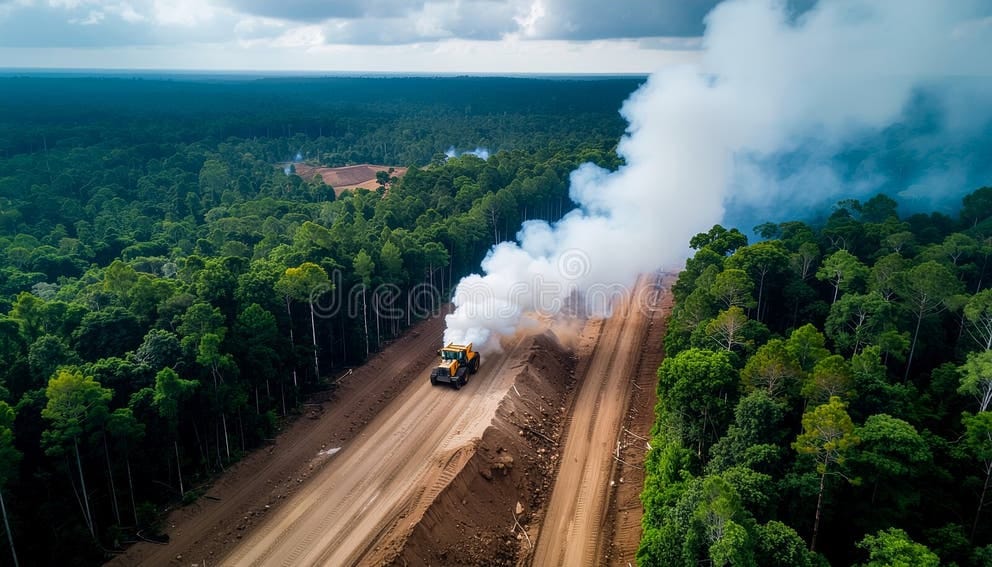
Wouldn’t it be great if projects could just roll along free of social and ecological constraints?
What is the Obstruction?
I recall Crane Brinton’s thesis [The Anatomy of Revolution, 1938] that revolution occurs not in time of repression, but of rising expectations. True for MAGA and its revolt against law and democracy. Always the way with demagogue leaders: We are inflecting so let’s push that “progress” arrow up, up, up people! And what is the obstruction? Pick a scapegoat. Immigrants? Gawrsh, not like you and me. Bureaucrats? DOGE them! Indeed, why have gummint at all? Perhaps it is good for war (to protect us?), but not regulation (to protect us).
The obstruction is the state of growth itself that will reach limits and inflect. I want to consider the 1960’s as our base case. It was well into the AOS growth phase and all the post-WW II transient in our lives. That was exceptional here in the US compared to defeated and depleted of WW II “over there”. I was first in England in 1963 and I could see the shadows of destruction and rationing still. Yet, before Beeching decimated the railroads and motorway rampage started—the delayed pro-ject of our TOD discarding—the towns were nice, clustered and lively communities with bicycles more than cars. I still managed to be knocked over on my bicycle (in Cambridge) by an American in a big car.
I came home from England in 1963 to…Abundance. The destruction and rationing of WW II were not shadowing US! My parents were both from single-parent households. Neither had more than a High School education, but that made them about as qualified for a good job as a BA does now. We had our own house, in Stamford then in Norwalk, CT and a summer cottage on Cape Cod. My parents could afford to send me and my brother to private engineering schools. There were two cars and a garage. Oh, lots of cars everywhere still in an exponential increase in number and vehicle miles traveled (VMT). We lived practically next to the Merritt Parkway, our early version of what the Brits would come to call a “dual carriageway”. Further south along Long Island Sound was the Connecticut Turnpike we had seen coming through my original town (Stamford, CT) and paralleling the old New Haven Railroad line that still served the Manhattan commuters who made lots of money and so bought big houses cheap in the suburbs. We were all happy as clams, right?
In the AOS it was taken for granted that at least the Father would have a car to commute with. And the big station wagon served to zip up the Connecticut Turnpike in the summer to the Cottage. We knew what it was like previously, going up the old Post Road through city centers on the trip that used to be an overnight-stay trip for my parents and was pretty much 1 AM to noon in my time (so we kids could sleep and not be a pain). In my High School days (1963-66) I could make the trip in under 4 hours (don’t tell the State Police). Perhaps it was the aerodynamics of that 1959 Chevy Impala, the one with the tail-end airfoils instead of vertical tail fins. Gas? 29 cents per gallon, and sometimes under 20 cents if you hit the “gas wars” in Providence RI.
But…in that phase of AOS growth there was still lots of land converting from the farms around the cities. Our development (for the second house we were in) was built in 1959 and a house cost $21, 000 (that my brother and I sold in 1982 for $100,000, the downpayment for my next house). My own first house in Troy was a 1835 three-story rowhouse (with tenant) I bought for $11,500 in 1972. If you moved out of the NY-suburban belt you could cash in on all the being-abandoned urban housing, if you got there before the highways and urban renewal. The government was eliminating housing stock, and industrial plant, but who noticed? At least up to 1973, the “Year Petroleum Killed America”.
The automobile VMT, despite the blips in the 1970’s was still growing exponentially and that is a key part of how even half a century produces a myth of what we want “back” because it was so great. The doubling period for VMT was about 23 years. For a commuter or kid walking to school (as we did) in 1960, there were 719 Billion VMT spread over the roads of the US [FHWA Highway Statistics]. A lot, yeah, but the new freeways, and even the Old Merritt Parkway were not that crowded, or insane with speeders. I used to wander about US Route 7, and even run across the Parkway without much threat from cars. The back roads were a stroll. By 2001 total VMT was 2.8 Trillion vehicle miles: A fourfold increase over 1960. Traffic changed and with it the perception and function of the entire urban ecology, including what used to be “rural”, or the kind of suburbia the commute would go home to and sigh with relaxation and a martini.
In my youth (and I mean about age 3 to 12) the change in urbanization was more apparent to me than the traffic change, although my first ride down the Turnpike in 1958 was an experience, of a bleak, open road and a speedily passing wayside except for what could still be seen in the downtowns, like Bridgeport. There were still factories!
Industrial and other Policy
Behind all this were prevalent industrial jobs. Anyone living in southwestern CT today would not characterize it as mill towns. But it was. The high school graduate, or less, and the returning veterans could get the kind of factory job that would buy a house (or two) and send the kids to college. Good elementary and high schools were free. I was the first class (ca. 1954) into the brand-new Newfield School in Stamford that still proudly serves the wealth-class able to afford a house in north Stamford.
Our house, in Stamford was bought by may parents in 1939 for $10,000. Probably a 5% mortgage (over the 3% interest the bank gave you on your savings). That house cost probably 10 years of total wage, but obviously affordable by a couple working at the ball bearing plant. Then only one wage earner when we came along (no daycare!). The ball bearings laid off after the War but my father still supported the household with another industrial job, first in Stamford but then moved to New Canaan (yes, an industrial shop in New Canaan!). I remember the reservists marching down the main road in Stamford, going to the Korean War.
As part of my Father’s job move, and the encroaching urbanism in our Stamford location (formerly farmland and fields) we moved to Norwalk, selling for $10,000 (same as purchase price in 1939) and buying up to $20,000. That was into new development (pretty much all raised-ranch) with expansion of the development after 1960 up the hill where they blasted rock. They also built one house on a peat bog. In a few years it was keeling over like the Titanic. Our house was built on rock fill over a wetland and in a few years we noticed its foundation corner was also headed overboard. What building and plan regulation? Grow in Abundance!
A change in the industrial landscape was becoming apparent on Stamford ca. 1960. At that time the whole downtown was changing appearance, from urban removal that accompanied the first out-migrations of corporate headquarters and financial offices to Stamford. Did you know that in the early 1960’s the Stock Market was threatening to move out of Manhattan to Wilton, CT (just north of where we were in Norwalk)?
There was a push-out of the manufacturing industries from the old rail centers. Some of them went further afield, to suburbs and then “the south and west”. But there was a also a pull-out. As with the ball bearing plant (to which I owe my existence), it was bought by a German firm and left Stamford. In my university years I worked at what was still a high-tech corridor along US Route 7, mostly towards Wilton. After all, Barden bearings (for the Norden bombsight) had already located in Danbury along Rt. 7 during WW II. But technology change means volatility for those industries and they thin out as they move south and west and overseas. Norden relocated to Norwalk but then was closed by its over-corporation in 2012 for a loss of 300 jobs.
Ah, the 1960’s with good schools for the kids, a job for me, and a wage that can buy a house, or two, and groceries and 29 cent gas. Take away the industrial jobs, move the tech jobs, and leave scattered “service industry” for the college (Masters preferred!) crowd, blow up housing costs anywhere near the jobs, charge $2 plus for gas, and creep along the Interstate to try to match your skill and residence to any job. We get Now.
Of course any detailed image of urban-industrial development depends on time and place. So does any ecological quality. But MAGA consists of a massive confusion of what “life was like in the US of A” and what it is now. There is a large dose of public finance (stretched), with VMT (jamming the decaying infrastructure), schools out of control five different ways, housing costs, costs of everything (inflation) and not a small dash of racism.
Environmental decay is a matter of taste and dosage risk. But all this still orbits around a focus on labor-wealth. And if Piketty shows anything [Thomas Piketty, Capital in the Twenty-First Century, in English 2014] it is that the money-economic returns to labor have been decreasing since the 1970’s relative to capital. Meanwhile, Gordon finds a structural change in American productivity in the 1970’s [Robert J. Gordon, The Rise and Fall of American Growth: The U.S. Standard of Living since the Civil War, 2017]. Me, I trace it to the inflation of everything when AOS meets “gas crisis” in 1973 while AOS was adding mobility out of our industrial centers all the way to overseas by “trade theory” that is the hyper-version of growth by consuming space.
But go back to 1791, or 1848. Alexander Hamilton submitted his “Report on the Subject of Manufactures” [1791] in an attempt to redirect attention from agriculture (in all that Space!) to manufacturing. He wanted the “American System” of fostering industry here, rather then elsewhere. I agree: It matters where it is and in what urban form. But the urban form (industry=city=center of labor) was just implicit then.
Hamilton wanted a combination of bounties and tariffs to encourage industry here, for defense if nothing else. But that was also catching up with the industrial revolution, the formal transient that with rail-transport produced TOD and with automobile the AOS. These are our urban-industrial ecological forms of everything, including any of the dimensions on which MAGAists might gripe and nostalgize about. Confusion indeed and ripe grounds for any demagogue.
In 1848 another observer of further industrial development, Karl Marx, with pal/supporter Friedrich Engels, also drew conclusions put into the Communist Manifesto. After that, to publication of Das Kapital [Vol. I, in 1867] Marx was back-filling economic theory to support a prior conclusion that labor was essential to economic value and getting gypped by capital. No theory of what makes the economy go-round is ever complete, but Marx is still correct that how labor makes income is essential to social stability. If we can believe Trump’s concern with working people (which I do not for a minute) he is a Marxist. In fact he is the political front for capitalism and exploitation of the ecology for some directions of industrial growth.
After Hamilton we get no consistent American industrial policy. We get sectional political argument and Civil War. From Marx we get the Soviet five-year plans (after Civil War, in 1928) that prove (to us) that State Planning fails in economic complexity to produce enough wealth to spread around.
The Soviets did achieve a fast transient of industrial development. We have not been able to stem the outflow of our previously-developed industry, and Trump’s tariff tantrums just show more of the defects of State Planning, especially when erratic and incompetent. We could look at where much industry has gone, to China, to see better State planning and rapid industrial development. We can talk about other aspects of centralized administration (that De Tocqueville feared for us) but the Chinese example simply shows a clever exploitation of trade: Let some already-industrialized market (US) define the demand and setup efficient industry to meet it. As far as industrial planning goes it is the best hybrid of centralized administration and market allocation. China also blows out its cities with VMT but there is enough sense to create a TOD overlay, with exportable high-speed rail. And they have the Road and Belt strategy to pull others into their market. Whaddaya want? We are efficient at it!
Is Abundance jealous of the Chinese? Well, we no longer believe in democracy. We believe in trade because we believe in the mobility-theory of value. Using space must produce optimal location of anything that, well, efficiently exploits space. For industrial productivity we refer back to Adam Smith as Hamilton did. And as our policy to scrapping the TOD did. Hear that big sucking sound? It is industry whooshing over space, and eventually overseas. Leaving us with the disgruntled who remember when the jobs were here, not there, and you could afford a house, etc.
Streamlined Abundance or IV&V?
If Marx, or Hamilton, or anyone, with a theory of how to keep labor happy was right, that should be the basis of our policy. But they, and looking-backwards MAGA, does not account for the limits of growth and the many dimensions of the ecology that will impose those limits and so an inflection in what we think of as “the Great times”.
Now we come to “abundance”, which is basically MAGA through the looking glass. It is about productivity such as Gordon (op. cit) was concerned with. If we can produce enough there will be enough to go around and there will be jobs and houses for labor to live in (the capitalists already are well-housed. Will there be smokestack industry again for the jobs? Trump just wants the smokestacks as long as they burn fossil fuels. But that would mean an industrial policy (see “State Planning”, Soviets, China, and Trump).
The gloss given by The Week to Abundance is adequate to identify its main directions:
Streamlining: “…slashing red tape, untangling bureaucratic webs, and making it harder to file anti-development lawsuits”.
Housing developments (if not renovation/preservation). Make Long Island Levittown again!
Infrastructure projects (What kind? At least not the “snail rail” like California’s high-speed rail, or any of the proposals I remember from the 1970’s).
I could apply the systems engineering method to this. Part of that in the specification and integration phase is Independent Verification and Validation (IV&V). That is the part where, independently from the Let’s Do This advocates, the specification (the What is done) is:
Verified to answer the question: “Are we building the product right?”
Validated to answer the question: “Are we building the right product?”
Efficiency is just after the fact of validation. Streamlining is…cutting out the IV&V or making it more efficient? The bigger the pro-ject and the more ecology it affects, the more complexity extenuates the IV&V. Efficiency cannot mean ignoring risk of either V, or biasing the I by project advocacy. Only in small actions for which the doer is wholly accountable is the IV&V implicit. Streamlining to get rid of the I, the V and the V is what MAGA is already doing for the biggest projects of war, on civil rights or for ecological exploitation. Policy could use IV&V but that is never applied in an autocracy. And if you hear of any pro-ject Czar, that is what you have.
IV&V or NIMBYism?
The streamlining theme was emphasized in an interview I heard (3/4/26 on our Capital Press Room show on Siena University radio). It was a pretty cogent presentation by NY State Senator Rachel May on streamlining our State Environmental Quality Review (SEQR) process, something we share with California. May’s basic premise was that good projects were held up by NIMBYs who manipulate SEQR. Especially an elite on Long Island (like the ones who made the railroads and even Moses’ highways go around their estates). But the issue also relates to a recent comparison of apartment construction in Troy versus Albany.
We in Troy have some “good” construction and renovation projects to reuse our decimated brownfields, rebuild demolished brownstone neighborhoods, convert some industrial buildings and even rebuild first-generation “slum clearance” highrises. This is true “rebuild” of efficient urban form rather than sprawl. Part of that is a community geothermal field in the downtown. Yes the utility doing that is going through full public-service commission review but that has not added much time to the proper planning of the project, with reliable cost and user-charge estimation.
Albany in contrast seems to be tripping over its own restrictions (e.g., “affordable” housing). They have also had fatal fires (what building inspection?). Albany, even more than Troy, decimated itself with I-787 through it and getting rid of the south-end neighborhoods by Rockefeller’s Empire State Plaza. Now that is when we could do pro-jects! All it takes is enough centralized eminent domain power! Ooooh—did De Tocqueville just rollover?
Me, I fought all the demolition in Troy in the 1970’s that just removed what we had hanging on in the city. I also fought the greenspace-paving for the regional mall that sucked (trade-like) the commerce out of the old TOD cores. And the tools we tried were the Federal NEPA process and the regulatory/permitting tools around what is now the SEQR. We tried our best to impose IV&V.
When the Ecology seemed important
The National Environmental Policy Act [NEPA, Public Law 91–190, of 1969 but actually passed at the start of 1970] represents an inflection in the aforementioned “Great” times. In the 1960’s the “environmental movement” reflected what was wrong with “growth” as it exploited the “ecological basis of value” especially through fossil-fuel combustion and dumping waste product in water courses. There was a general unease among the young about the suburban consumption of space. In my case that became the obverse unease about urban depletion. NEPA could address only Federally-funded projects, but highways were a prime case for making them consider (if never independently) what they were doing, besides putting more traffic in urban space. The SEQR could be more general regarding private development affecting public resources.
What we got was rarely “bad projects” being stopped. They were either Federal projects that had no mission to “improve” anything as vague as the ecology or even the economy. After all, if State Planning of the economy was correct, why weren’t we like the Soviets or the Red Chinese? Our self-poisoning was covered by dosage-risk regulations, but Abundance can hardly better Trump on vitiating those. What does Abundance say about abundant watersheds, as we run out of water?
As for watersheds, and habitats and stuff, the projects usually win. It is only in cases where there is real ecological damage that the contest between bake-sale citizens and big-money corporations even has a chance of drawing out expense and time on both sides. That was the case when we were fighting a highway in Virginia affecting what became Huntley Meadows wetland Park. Yes, we exploited Coast Guard oversight of estuarine wetlands because the County advocating the road did not care. Our case in the Albany area about the regional mall we won with SEQR-type regulation and then lost to the political (corporate money) decision. That mall has had its financial ups and downs, is no industry but a retail service for (Chinese?) products yet sits firmly with its vast parking on onetime Pine Bush aquifer and habitat. And yet it expands with another 50 acres of woods and residences. Abundant what?
The case of industry of the current hi-tech style (chip fabs) having to take green space was considered in a previous article. Nothing will stand in the way of that industrial policy by New York (and nationally the CHIPS act). But that is back to the bigger questions of industrial policy and State Planning that we believe does not work—except in little spasms of enthusiasm to get that plant Here! That becomes inefficient State whipsawing, sorta like what the railroads did: Gimme money and I will locate Here! As for the current tariff tiffs, we get both inefficiency and bad economic planning by mistaking an antagonistic foreign policy for an economic plan.
The defense policy survives from Hamilton, and Lenin. If we make weapons, that will be here and serving a demand that the State creates for them. That gets into the Public Finance that takes from the services to the proletariat, like health care and education. Is Abundance having both? At what cost?
This is to argue that if Abundance is trying to override Big limits to growth, it goes much farther than some bureaucrat reviewing an EIS, or SEQR analysis, or even building plans. As for rail projects, they were over with the TOD. Want high-speed rail? Sure, upgrade the middle two tracks of that four-track mainline. Whoops, reduced that to two tracks when the Interstates came along. If Abundance is building railroads like we build highways, efficiency is out the window with two antagonistic modes. But that has long been our policy.
Trying to cut (streamline) the “red tape” leads to what I call Abund-dunce: You don’t know what general effect, economic or ecological, some public policy or project will have until you analyze it. What part of the analysis, and accountability for those outcomes, do you “streamline” away? C’mon, there is nothing new here since 1970 when projects grumbled about NEPA, or SEQRs. What was corporate-dollar powerful got done anyway. Is the problem regulation or what corporations think is dollar-efficient in an economy where the big profit is exploiting resources, not building houses (beside the labor for that is in concentration camps or “sent away”). Why do think Drill-Baby was talking to Big Oil, not housing contractors. Of course if they want to take public lands for that…
There is another aspect that applies to the hard-up urban centers after the decline of TOD. Offer some “development” to a downtown and the officials are jumping over themselves to get it. Saw that in Troy in the 1970’s and the net result was the un-development of Troy as bemoaned here and in LTM. Let’s un-dunce all projects and public permissions to private projects. There has to be a credible showing of public interest. That needs careful and equitable analysis. Are there slam-dunk cases? Sure, like building apartments on that old brownfield (as is happening in and near Troy). Good, go to it. Who will object? The true NIMBY (Ewwww…that spoils my view) will succeed if rich enough and suborns the politicians. Otherwise, the threat is much exaggerated.
Then the other legs of the Abund-dunce triangle depend on how competent any level of policy, regulation and approval is. There are bad housing projects (highrise ghettos, or “let’s take the last riverside woods for some houses when there is plenty of downtown space”). And there are projects that do not go because the public cannot kick in enough $incentive for something that is economically inefficient. These are example I see in and around Troy. Did I mention the aggregate-making kiln burning toxic waste, or the waste-dump, both near housing and schools? It matters what you are efficient about.
Limits to Abundance and Inequity
Show me a good project and let it proceed. The problem is the “me” and the “good”. As we become a more intensively-, and extensively-bound ecology, how the “me” and the “good” is defined is more and more a problem of social organization for and in complexity.
LTM and these articles [e.g., about the Ostroms as poles of ecological management) are all about that organization and decision process. It is the ecological limits, the risk management and the equity that matter. The idea that we just need more growth without equity either to people or the rest of the ecology is what we have been trying for so long, and here it is again in both MAGA and Abund-dunce.
Risk management is what decides when a project can be Good or Bad given the uncertainties of how it affects the ecology, jobs, public health and welfare. How it affects the “whole economy” is not a job we give to anyone because that is undecidable (says our market economy). The problems of organizing equitable risk management that is comprehensive (accountable to the ecology, not projects) needs a governance hierarchy properly allocated by scale. At its base is just what our market-democratic ideology supposes, as accountable modules with responsibility for space-time jurisdictions. Abundance seems to be most concerned with that interface where the accountable ceases to be accountable. Regulation by higher levels covers what a locality cannot be accountable for. LTM is a generalization of what Elinor Ostrom supposed for small communities in discrete common-pool resource (CPR) domains. It is all about the Abund-dunce of More being the enemy of Enough for the people who have to live in the ecology.
Ostrom does not doubt that when a group is dependent on an existential CPR, they will act equitably and accountably. That is our evolutionary history. The radical novelty is the intensity and extent of all our interaction under the modern parameters of mobility and bandwidth. Then consumption is no longer within local accountability and “efficiency” is how I get what I think is Good while I dump what is Bad somewhere else. That is why equity has to go with risk management. Abund-dunce is the illusion of More indifferent to risk and equity. Yes there is “friction” with regulation when there is too much indifference, and should we streamline regulation into indifference? The effectiveness of regulation is the real problem and that is not being promoted (look at what is happening to the EPA).
In the course of developing corruptible regulation do we get some bad organization with inefficient and ineffective “bureaucratic webs”? Sure, and we have to tackle that with allocation of accountability for risk and equity. The pro-ject enterprise is always efficient in what it is trying to do, but corporate or State pro-jects are hardly the discrete little acts that affect no one else.
As for the examples of stupid “high speed rail” management, that is part of the whole story of what happened to rail in the TOD. It is a formal effect of a long formal cause that needs to be corrected. Wanting rail is inefficient of not tied to the urban form, and so the industrial form. TOD was how we got that integration in something approaching a market-democracy, with regulation when the railroads got too big for their ballast. AOS was just a statement that the State would take over the transport projects (that were immensely inefficient by any rail criterion) and not care about the urban form. Of course there was no concern for the industrial form until it started disappearing too. Wha…aren’t highways efficient?
To get down to just the industrial-labor part, we suffer from having blown off Marx because of the Soviet example we emulate the worst parts of: Our State projects without an industrial development policy or wealth-equity policy. Progressive income and capital tax? That was there in the Communist Manifesto. Housing, health care and education for the proletariat? Yup.
Marx was never much concerned with ecological regulation, but had a radical answer to corporate capitalism. We have blown off any practical (versus academic) consideration of political economy regarding the wage-price-profit-capital system that preoccupied Marx. We have instead ideological postures like laissez-faire (don’t regulate me!) now in the guise of Abund-dunce. Why not go-go-grow? But how, for whom and with what ecological outcomes? Marx obsessively considered that and we only got to ecological scope in the 1960’s, when we had such abundance because the real constraints (social and “environmental”) were still so slack, until we got to the point of self-poisoning in the dosage-risk threshold. Does getting rid of EPA help that?
Some attention to the problems Marx considered cannot imply complete State Planning for industry, economics or the ecology, let alone its abandonment of regulation or the general Welfare. The whole thesis of LTM is that managing the ecology is too complex for any purposeful pro-ject that just becomes more potent and unaccountable as it rises up the State (bureaucratic and demagogic-political) hierarchy. We let distributed decisions decide what is efficient, equitable and accountable. The governing hierarchy is there to regulate the outcomes that escape those criteria. It is not centralized-administration to do bigger projects more efficiently.
Abund-dunce can smarten up to what Elinor Ostrom was about: Accountable ecological stewardship at the level—mostly local—where it matters. Doing good regulation at the proper level would address the problems of regulation we have had since the Interstate Commerce Commission (1887), Trade Regulation (1890) and all the partial regulations, or ineffective requests to “consider” impacts up to NEPA. Right now the mood is to just “streamline” regulation, which is to say do projects faster. And that is the -dunce part whether of MAGA or the Abund.